
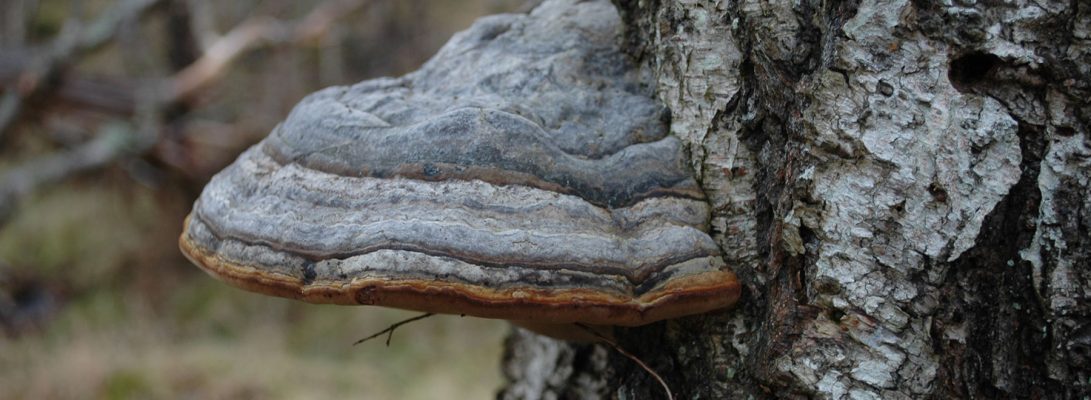
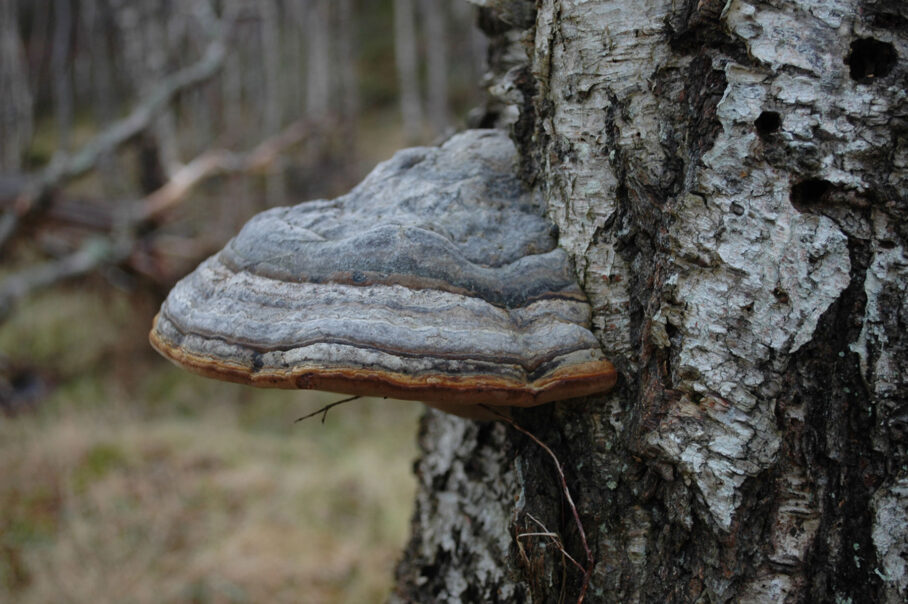
Beauty or beast? A tree lover’s guide to spotting this fascinating but harmful fungus!
Understanding the hoof fungus. A fungal threat to your trees.
If you’ve ever wandered through a woodland or peered closely at your garden’s older trees, you may have encountered the Hoof Fungus – Fomes Fomentarius. It’s fruiting body is hard to miss with its hoof-like shape and layered greyish-brown shelves giving it a striking, and quite beautiful appearance, but before you admire its rustic charm, let’s look at what this fungus means for your trees.
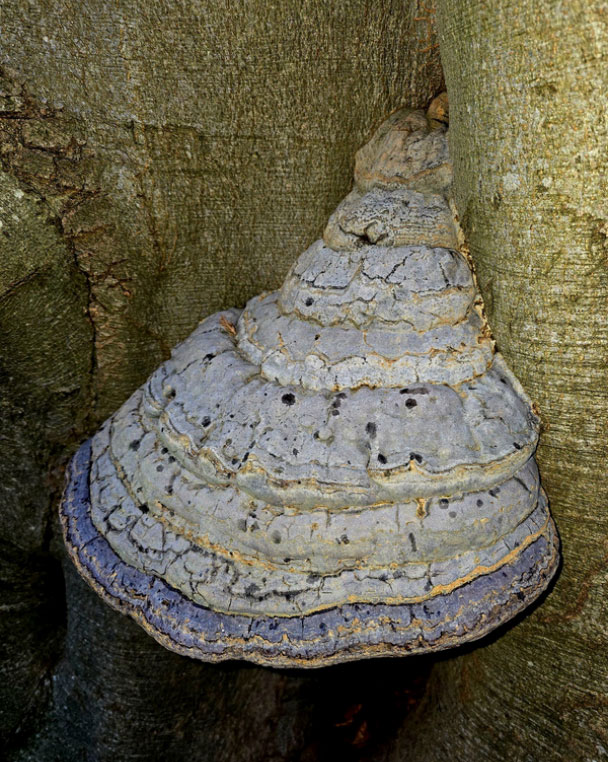
The Hoof Fungus primarily targets hardwoods such as Birch, Beech, and Oak but will also infect other deciduous varieties. It’s a parasitic and saprotrophic fungus, meaning it invades living trees and feasts on dead wood, leading to significant internal decay. This fungus sneaks in through wounds or damaged bark, spreading its spores via the air. Once it settles in, the Hoof Fungus gets to work decomposing the tree’s (heartwood?) lignin and cellulose, causing white rot. Over time, this weakens the tree from the inside out, leaving it hollow and vulnerable to storms, falling branches, or even complete collapse.
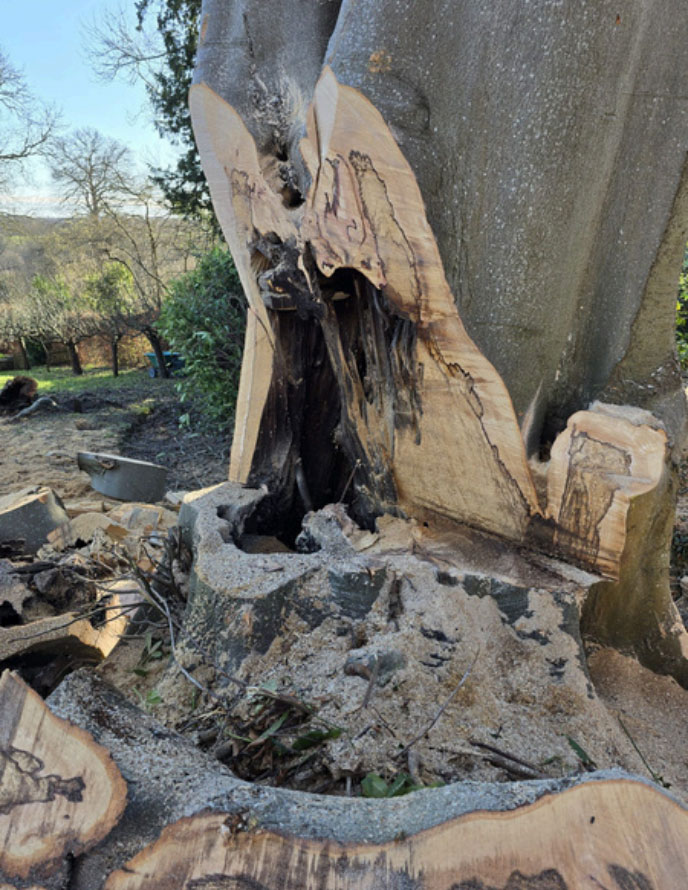
What to do if you spot a hoof fungus
Firstly, one should resist the urge to remove the fungus bracket, that won’t solve the problem as the fruiting body of any fungus is key to its identification. Instead Call a suitably qualified arborist to undertake a site visit where they can identify the pathogen. Once this has taken place they can advise you on the best course of action for your tree.
To prevent the spread, take a few precautions: prune trees during dry weather, seal any wounds with fungicide and always clean your tools between uses. If you’re planting new trees, try to avoid stressors like waterlogging or mechanical damage that might leave them vulnerable to fungal attack.
Nature’s firestarter
Interestingly, the Hoof Fungus hasn’t always been known as a pest, and had several uses for our ancestors. It earned the nickname the ‘Tinder Fungus’, as in centuries past, it was dried and used as tinder to start fires, as it has an ability to easily catch a spark. Additionally, the fungus could carry an ember for hours and even days, making it the perfect tool for transporting fire from one encampment to another.
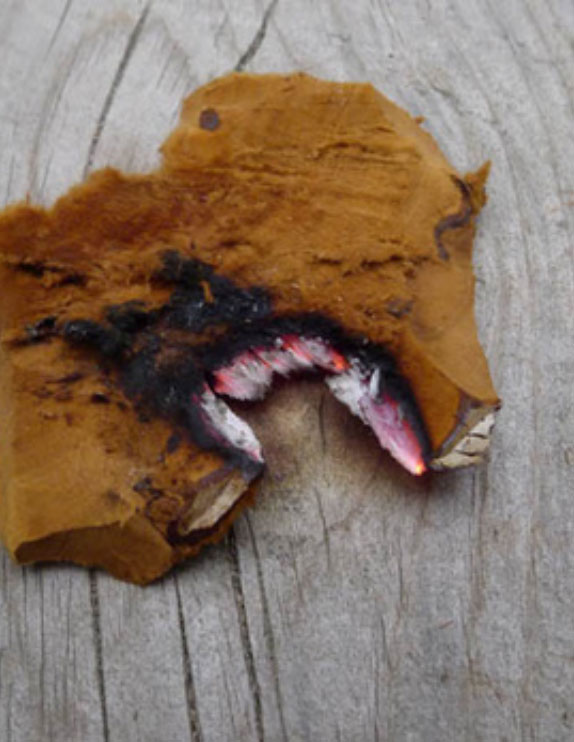
Keep an eye out for those hoof-like growths. While they’re fascinating, and often beautiful to look at, they’re a signal to take action before your tree becomes seriously compromised.
