
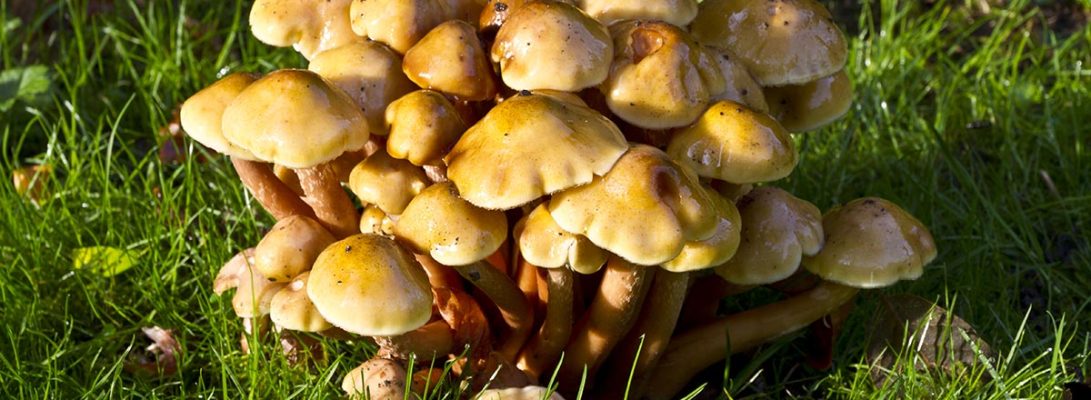
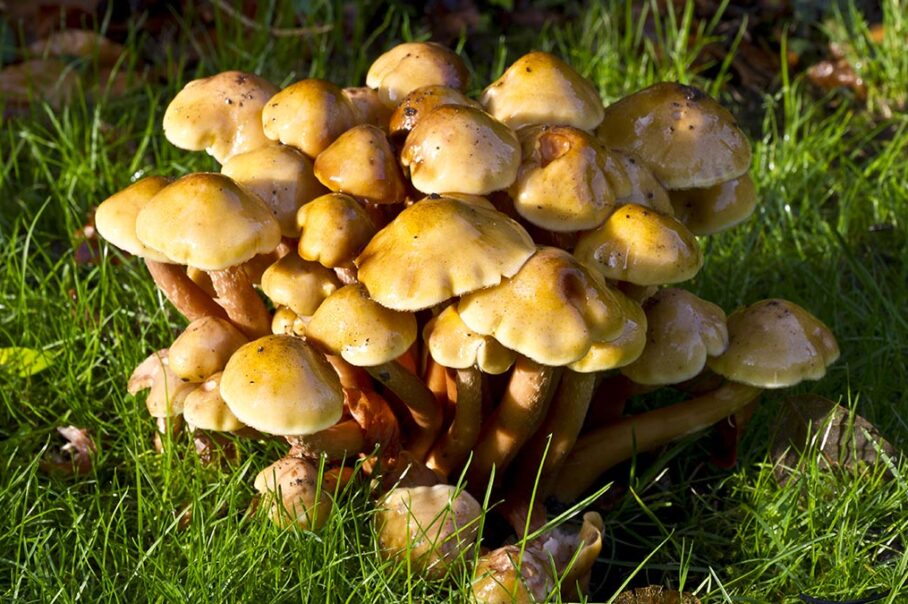
It’s a common sight on a woodland walk, and although the fruiting body of the Honey Fungus has aesthetic appeal, there’s nothing sweet about having this deadly fungus in your garden.
There are several different species of the parasitic fungi within the Armillaria genus that silently spread beneath the soil attacking and killing the root systems of many trees, and perennial plants, eventually killing the host. Due to the lack of competing fungi in comparison to woodland habitats, the Honey Fungus tends to inflict more damage on managed gardens.

It is crucial that potentially infected trees are professionally assessed and managed to stop the catastrophic consequences of the fungus spreading to surrounding trees and plants.
The fungus can spread by 1 metre per year, making it difficult to contain. It has been found in a variety of habitats, including forests, grasslands, and even urban areas. Its sprawling mycelium network can cause entire sections of soil to become contaminated with the fungus. Once a tree is infected with the pathogen, cases are terminal, as there is no known cure, making it the most devastating disease in gardens around the UK.
Trees that are known to be highly susceptible include Ceder, Katsura, Birch, Leyland Cypress, Magnolia, Pear, Privet, Apple, Walnut tree, Laburnum, Oak and WIllow.
The fungus spreads underground through the soil with its brown or black root-like cords called rhizomorphs, which are the origin of the name ‘bootlace fungus’. These develop one to eight inches below the surface and upon contact with a viable host, penetrate into the inner layers of the bark.

Signs to look out for
If you notice a thinning crown, unusually small leaves, branch dieback, and ‘bleeding’ or cracking bark, then you might have a Honey Fungus infection. If you suspect an infection, peel away the bark at the base of a tree and look for a creamy white, paper thin layer of fungi – the mycelium – with the consistency of a mushroom. Additionally, having a dig around the roots will often uncover the darkly coloured ‘bootlace’ rhizomorphs.

The fruiting bodies appear in dense clusters around autumn and will grow around dead tree stumps and roots. However, they can also appear directly from the rhizomorphs, far from an infection site.
